The first time I came to America, I wasn’t immigrating yet. I was maybe seven or eight years old, traveling from Jamaica on a visitor’s visa with my mother. We made several of those trips before we officially moved to the United States.
Looking back now, I realize I never experienced America the way children usually do.
There was no Disney World. No child-centered itinerary. No souvenirs meant specifically for me. I wasn’t brought along because someone thought, “Let’s give this child a magical experience.”
I came because I was useful.
Back then, airline tickets for children under a certain age were significantly cheaper than adult tickets. Children could also still carry luggage allowances. And in those days, getting a U.S. visa from Jamaica was difficult enough that simply being able to travel carried status.
So I traveled with my mother while she shopped.
At the time, I didn’t fully understand what I was witnessing. I just knew that America seemed to revolve around stores, hotels, luggage, and things being brought back home.
Now, as an adult, I realize those trips were deeply tied to class signaling and aspiration.
My mother loved buying household items in Miami. Decorations. Towels. Little things that made a Jamaican house feel “foreign.” More modern. More American. She especially loved bringing back groceries that seemed exotic simply because they came from the United States.
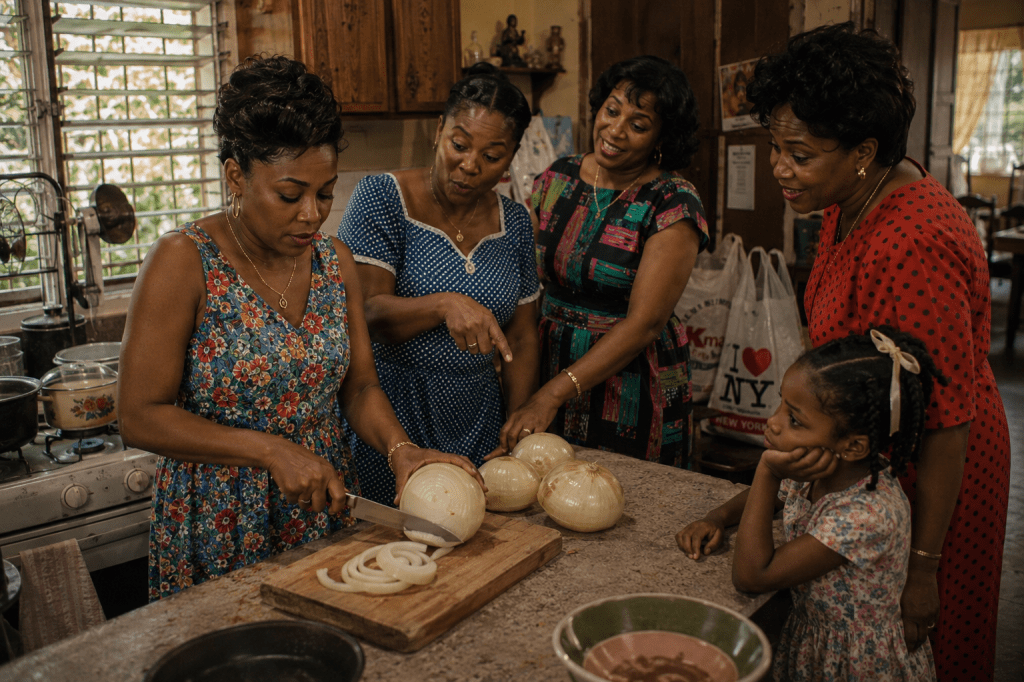
To this day, I remember her bringing giant American onions back to Jamaica in her luggage.
Onions.
As a child, I thought this made absolutely no sense. We already had onions in Jamaica. Why was she hauling produce through customs like some kind of vegetable smuggler?
But then guests would come over to the house and notice the size of them while she cooked.
“Where did you get onions that big?”
And there it was.
“America.”
That was the point.
The onions weren’t onions. They were evidence. Proof that she could travel. Proof that she had access. Proof that she was upwardly mobile enough to leave the island and return with pieces of another world packed into suitcases.
Even the trips themselves felt adult.
I remember being excited one day because my mother promised we’d ride the train in Miami. I cannot remember now whether it was the MetroMover or the Metrorail, only that in my mind it sounded magical. Like a ride at a theme park.
That was how little I expected.
I wasn’t hoping for Disney. I was thrilled about public transportation.
But somewhere during the trip, my mother lost her wallet. And suddenly the entire mood changed. Panic. Stress. Anger.
And somehow, because childhood logic inside unstable environments is cruelly flexible, I ended up getting screamed at for it.
As though the train ride had been my selfish idea.
As though her losing the wallet had become my fault for wanting joy in the first place.
That pattern would repeat throughout my childhood in ways I didn’t fully understand until adulthood. Moments that began with excitement often ended with blame once adult stress entered the room.
What strikes me most now is how much detail I remember.
I remember airfare rules. Luggage limits. Visa scarcity. Shopping habits. Hotel rooms. Imported groceries. Social signaling. Currency exchange. The emotional atmosphere surrounding travel.
Most children do not archive those details.
Children who are allowed to simply be children usually remember rides, toys, beaches, cartoons, and snacks.
I remember logistics.
That alone probably explains more about my childhood than I realized at the time.






Leave a Reply