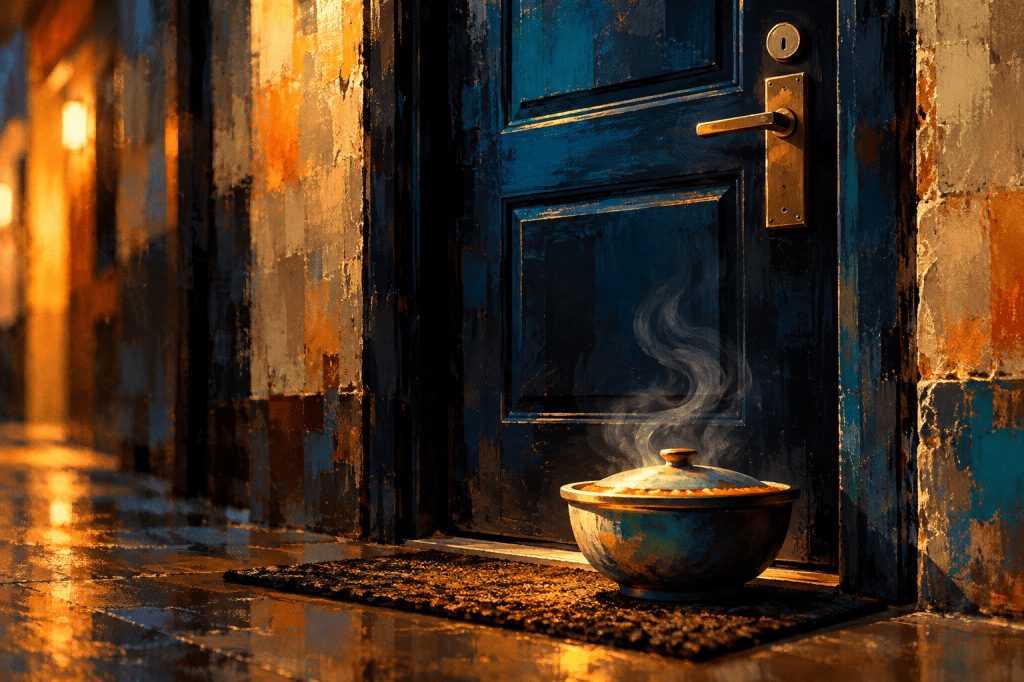
The Soup Outside the Door
When COVID nearly killed my younger brother, I learned just how quickly an ordinary family illness could turn into a life-threatening medical emergency.
Not the kind of sick where you stay home for a few days, drink some tea, and complain about losing your sense of taste.
I’m talking about the kind of sick where people start using phrases like organ failure and life support.
But before we got to that nightmare, there was soup.
My brother had contracted COVID after exposure involving his middle child. The child’s mother had gone on a cruise, and somewhere along that chain of events, the virus made its way to him.
I don’t know what the cruise was like, but I can tell you the aftermath was no vacation.
When I learned he was sick, I did what I could.
I made him soup.
Now, I wasn’t about to go inside his apartment and expose myself to COVID. I loved my brother, but I wasn’t auditioning to become the next patient.
So I brought the soup to his door and left it outside.
A socially distanced delivery, courtesy of his older sister.
It wasn’t a grand gesture. I couldn’t treat the virus, and I certainly couldn’t predict what was coming. But I could make sure he had something warm to eat.
Sometimes caring for somebody looks like showing up with a pot of soup and knowing when to stay on the other side of the door.
When COVID Became a Life-Threatening Emergency
Unfortunately, soup was not going to fix what was happening inside his body.
His condition deteriorated.
Eventually, he ended up in intensive care.
His organs were failing. His heart was in trouble. Machines were helping keep him alive.
The situation had gone from a sick man recovering at home to a genuine possibility that my younger brother might never come home.
And that terrified me.
The Fear of Losing My Younger Brother
I had never experienced the death of an adult sibling.
I didn’t know what that kind of loss would do to me, or how it might fundamentally change the person I was.
My brother was younger than me. In my mind, he was supposed to outlive me.
Of course, life makes no such promises. People die out of order every day. But knowing that intellectually is very different from imagining your own younger sibling dying before you.
Whatever complications existed between us, I wasn’t prepared to lose him.
We had grown up in the same dysfunctional household. We had witnessed things children should never have had to witness. We shared a history that nobody else could fully understand from the inside.
That doesn’t mean we experienced everything the same way. We didn’t.
But he was still my brother.
And I wanted him to live.
There is something profoundly helpless about knowing that someone you love is critically ill while you’re sitting at home, unable to do much of anything.
You wait for updates.
You try to make sense of medical information.
You imagine the worst and then tell yourself not to imagine the worst.
And because this was COVID, the ordinary ways families might gather around a sick relative were severely restricted.
I couldn’t simply walk into the ICU, pull up a chair, and hold his hand.
I had to rely on other people and whatever information made its way back to me.
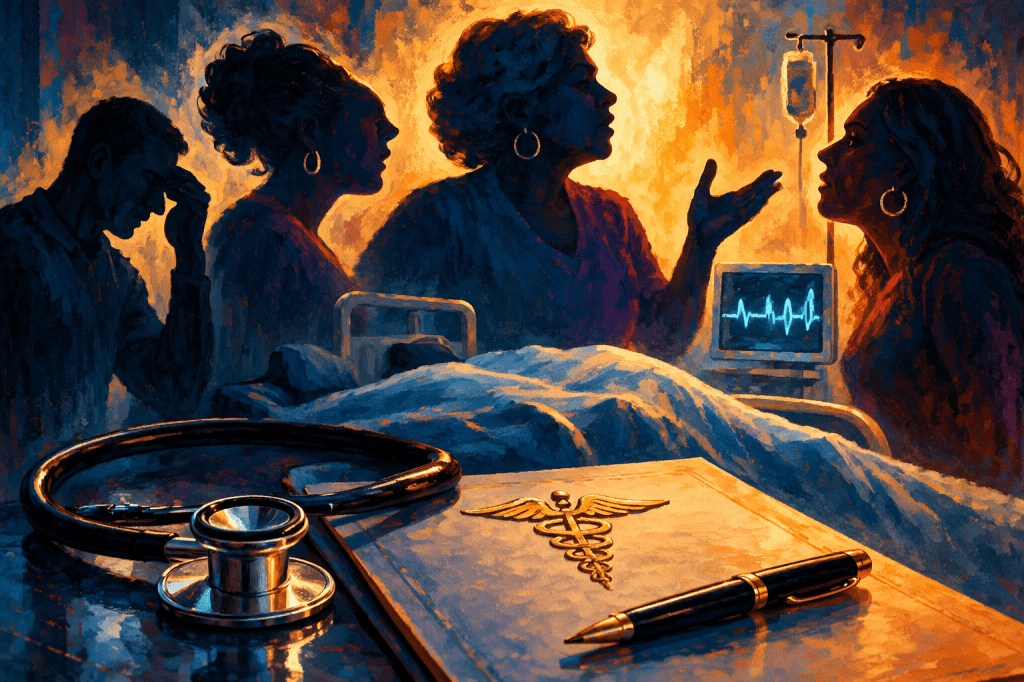
When a Medical Crisis Becomes a Family Crisis
As frightening as that was, I had no idea that my brother’s medical crisis was about to expose an entirely different set of problems.
Apparently, a near-death experience wasn’t enough excitement for my family.
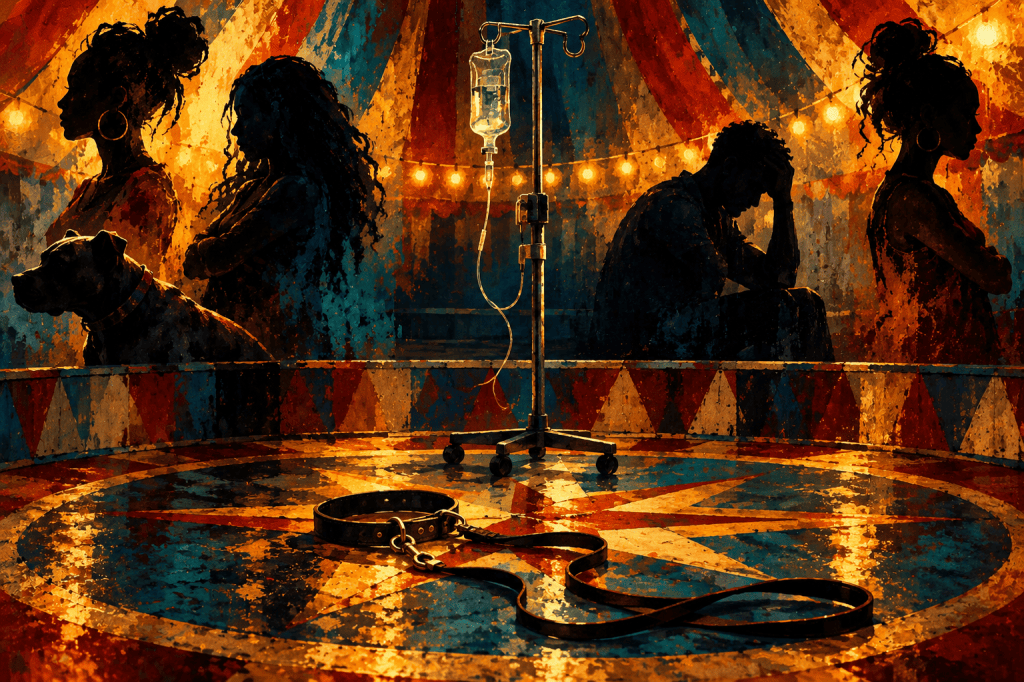
There also had to be a power struggle.
And because this is my family we’re talking about, naturally, the power struggle involved my mother.
But that’s a story for the next installment.
For the moment, all I wanted was for my younger brother to survive.
I had left soup outside his door because I thought I was helping him get through an illness.
I didn’t realize that the illness would eventually force me to reconsider who he was.
Or that surviving COVID would turn out to be only the beginning of the story.
Next in the series: Who Gets to Decide If You Live? When my brother’s condition became critical, his medical power of attorney became the center of an unexpected family power struggle. Part Two publishes October 16, 2026.



Leave a Reply