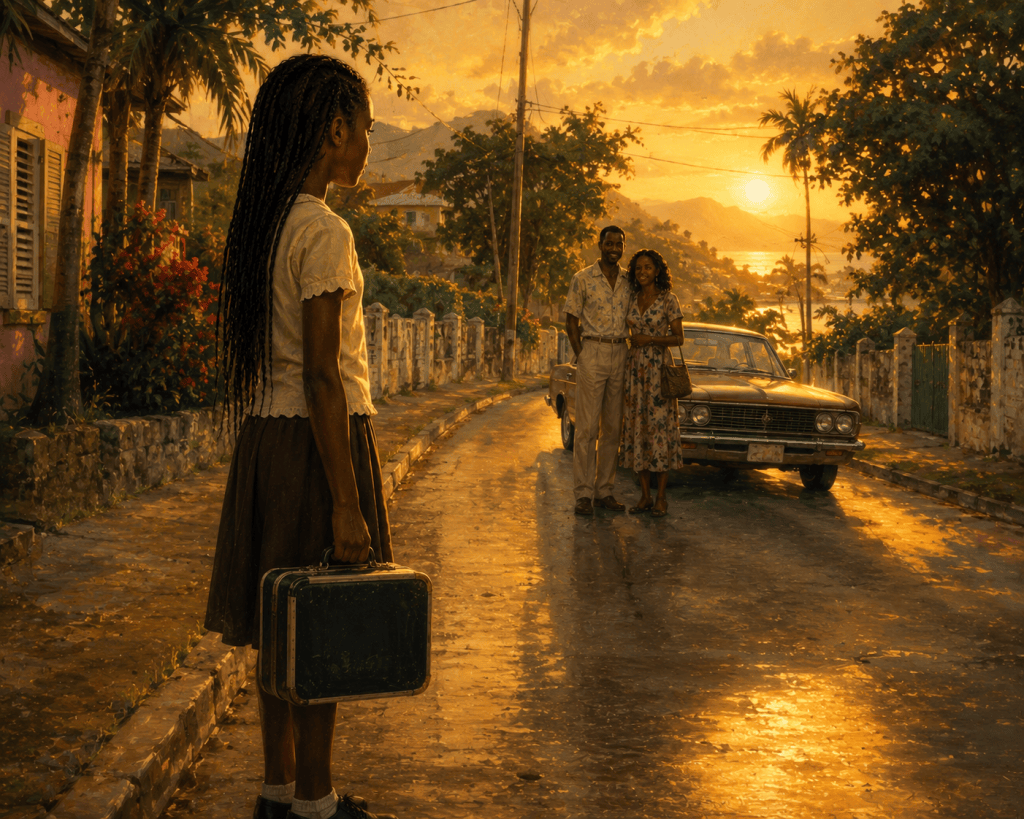
One of the strangest parts of my childhood was how temporary everything felt.
My parents had an explosive relationship. They would separate dramatically, fight, rupture the household, and eventually my mother would send me back to Montego Bay to live with my grandmother whenever things became unstable in Kingston.
Then, months later, sometimes close to a year later, everything would suddenly reverse.
My parents would decide to “work things out” again.
And that meant collecting me from Montego Bay and pretending we were a family again.
As a child, I always fell for it.
My mother would arrive looking beautiful and polished. New hairstyle. Fresh clothes. Makeup done. She always knew how to present herself well. My father would seem calmer too. The atmosphere felt lighter. Hopeful.
And because I was a child, I believed them.
I believed this time things would finally be normal.
I remember being genuinely excited whenever they came to get me. I loved my grandmother deeply, but children naturally want their parents. They want the fantasy of stability. They want to believe the adults have finally figured things out.
My grandmother, on the other hand, usually cried when I left Montego Bay.
At the time, I thought she was simply emotional.
As an adult, I think she already knew what I was returning to.
Still, she packed my clothes carefully, hugged me goodbye, and wished me well every single time.
Then I would return to Kingston and begin another version of childhood.
Usually that meant another school too.
That constant instability is why I attended so many schools in Jamaica before immigrating to the United States. My education kept restarting because my family kept restarting.
When things were calm, I lived with my parents.
When things exploded, I got sent away.
Then the cycle repeated.
As a child, I experienced these reunions as hope.
As an adult, I recognize them as emotional weather patterns inside a deeply unstable family system.





Leave a Reply