I would love to tell you that surviving dysfunctional parents made me their opposite.
That’s the version people like.
The wounded child grows up. She goes to therapy. She learns boundaries. She meditates. She exercises. She forgives what she can, releases what she can’t, and becomes living proof that the cycle has been broken.
Cute.
That’s not quite my story.
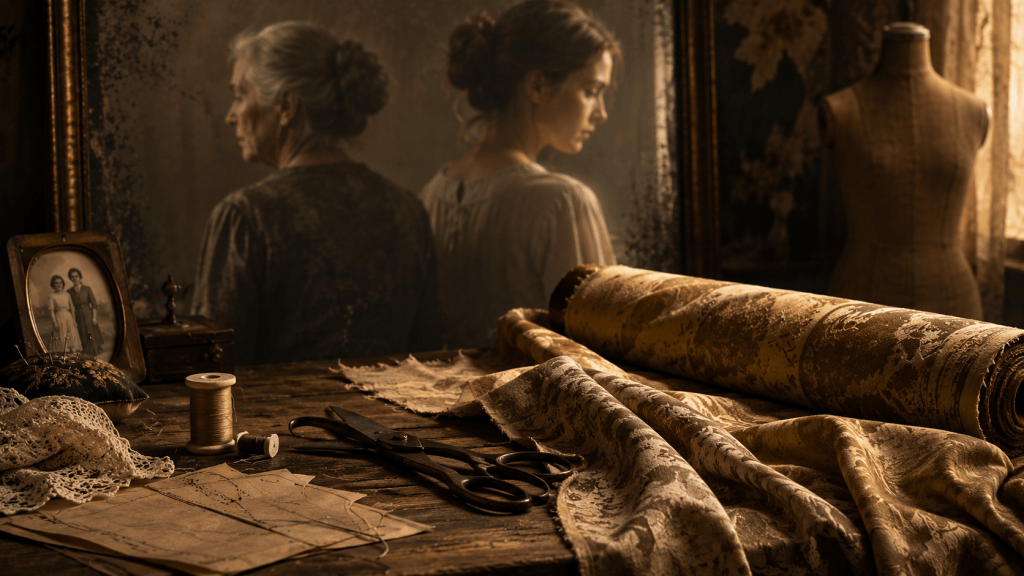
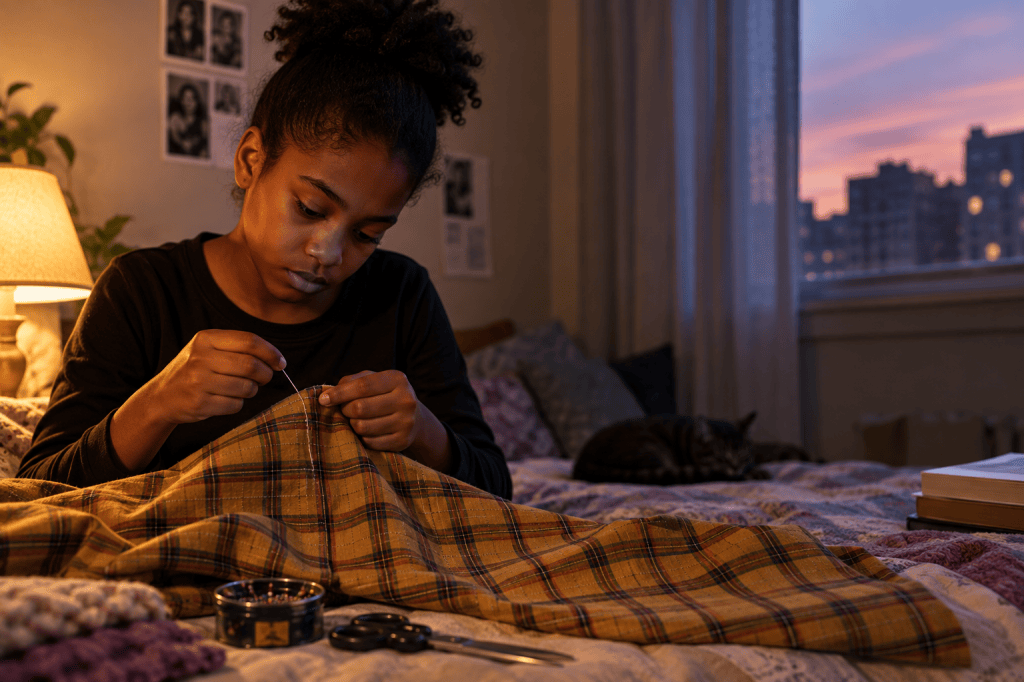
I am cut from the same cloth as my parents.
I’m just better at it.
I know how to read a room.
I know how to wait.
I know what people care about. I know what embarrasses them. I know what they want hidden and what they fear losing.
I can be spiteful.
I can be punitive.
I can be calculating.
And perhaps the most uncomfortable part is that when I believe someone deserves the consequence, I don’t feel guilty.
I feel righteous.
I didn’t escape my childhood and emerge morally untouched.
I escaped it trained.
I Learned Power Before I Understood It
I spent much of my childhood managing adults.
Not officially, of course. Nobody gave me a job description.
Children in dysfunctional homes rarely get one.
You simply learn.
You learn which footsteps mean trouble.
You learn the difference between an ordinary silence and an angry one.
You learn how to read someone’s face before they speak.
You learn when to disappear.
You learn when talking will make something worse.
You learn how to manage a room you have absolutely no authority over.
And you become very good at predicting people because sometimes predicting people is how you protect yourself from them.
I don’t know how much of the person I became was created in that environment and how much arrived with me.
Maybe some of it is temperament.
Maybe some of it is encoded somewhere in my DNA.
Maybe I would have been strategic and stubborn and vindictive if I had been raised by fucking June Cleaver.
I don’t know.
I’m not going to manufacture a psychological explanation simply because readers like origins.
What I know is that I grew up around power.
I learned very early who had it and who didn’t.
I was usually in the second category.
I Am Not a Violent Person
I don’t fight.
I don’t even know how to fight.
When someone has to use physical violence to establish power over another person, I find it primitive.
That’s my judgment. I’m not pretending it is some universal philosophical truth.
I’m judgmental.
I’ve never pretended otherwise.
And when I say that, I’m not talking about the psychological consequences of domestic violence or sustained physical abuse. I know those consequences can last far longer than bruises. I grew up around enough violence to know that something physical can move permanently into the mind.
I’m talking about the use of physical force as a demonstration of power.
I’m stronger than you. I can hit you. Therefore I win.
That has never impressed me.
It disgusts me.
But here’s where my story becomes less flattering.
I didn’t grow up and become uninterested in power.
I became interested in a different kind.
Information.
Timing.
Distance.
Documentation.
Rules.
The law.
Silence.
And sometimes the strategic withdrawal of silence.
I learned that you don’t have to put your hands on someone to impose a consequence.
The people who raised me taught me that power matters.
I simply learned a different language of power.
I Need There to Be a Consequence
Being harmed bothers me.
Obviously.
But being harmed and watching the person who did it walk away untouched bothers me on another level entirely.
I hate the idea that someone can hurt me and simply continue with their life while I’m left carrying whatever they put inside me.
Maybe that’s because I watched adults do exactly that when I was a child.
Adults could frighten me.
Punish me.
Hit me.
Say whatever they wanted.
Then they remained the adults.
Nobody revoked their authority.
Nobody issued a citation.
Nobody made them explain themselves.
Nobody balanced the fucking account.
I was the one who had to adapt.
Somewhere along the way, I think something hardened around that.
Adult me has options child me didn’t.
I can leave.
I can document.
I can report.
I can tell.
I can learn the rules.
I can call an attorney.
I can remove access.
And yes, sometimes I want the person who harmed me to hurt.
There.
That’s the ugly sentence.
Sometimes I want to watch.
I Don’t Feel Guilty
This is probably where I’m supposed to tell you that admitting these things makes me ashamed.
It doesn’t.
I don’t feel guilty when I believe the consequence is deserved.
I feel justified.
Sometimes I feel righteous.
That word matters.
Spite says:
You hurt me, so I want you to hurt.
Righteousness says:
You deserve to hurt because you hurt me.
In me, those two things can sit comfortably beside each other.
I know how that sounds.
I’m not asking you to make it prettier.
I am capable of holding onto anger for a very long time. I can be patient about it. Time doesn’t necessarily transform what happened into something more forgivable in my mind simply because enough birthdays have passed.
My younger brother used to joke that he would never argue with me and then eat something I cooked.
To be clear, I have never poisoned anybody’s dinner.
What interests me now isn’t the literal accusation. It’s what the joke revealed about how someone who grew up alongside me understood my personality.
He didn’t think I would fight him.
He thought I would wait.
At the time, I probably just rolled my eyes.
Years later, I understand the joke better.
He had noticed something about me that I hadn’t yet put into words:
My anger has never needed to be immediate to feel complete.
If I believed something was unacceptable ten years ago, there is an excellent chance I still think it was unacceptable today.
Nostalgia doesn’t impress me.
Time isn’t an apology.
And forgiveness isn’t something I automatically consider virtuous.
Sometimes I Stop Protecting the Truth
I grew up in a family where image mattered.
Families like mine survive partly through silence.
You don’t tell outsiders what happens inside the house.
You don’t embarrass the family.
You don’t expose people.
You protect the story.
I don’t do that anymore.
And if I’m being completely honest, sometimes I don’t merely tell the truth because I’ve suddenly developed an abstract devotion to transparency.
Sometimes I tell the truth because the truth benefits me.
I don’t have to lie about someone to punish them.
Sometimes I simply stop protecting the truth.
That distinction matters to me.
If I have protected information because I loved someone, cared about them, or simply didn’t think anybody else needed to know, and that person harms me badly enough, I may stop feeling responsible for protecting their image.
I don’t need to manufacture ammunition.
Sometimes I just stop locking up the ammunition that already exists.
I’ve done this deliberately.
I’ve known exactly where information would travel.
I’ve known who would repeat it.
I’ve known what questions it would raise.
And I’ve spoken anyway.
Sometimes precisely because I knew.
That’s not accidental disclosure.
That’s strategy.
Even My Silence Isn’t Always Innocent
I’ve been estranged from my mother for a very long time.
There are many reasons.
I don’t want a relationship with her.
I don’t trust her.
I believe distance protects my peace.
All of that is true.
But if I wrote that my estrangement was only about protecting myself, I’d be lying to you.
Part of it is punishment.
I know image matters to my mother.
I know having an adult daughter who hasn’t spoken to her in decades creates an uncomfortable question.
Why doesn’t your daughter speak to you?
I know my absence creates that question.
Part of me likes that.
Part of me intends it.
For years, I believe my mother tried to answer that question by telling other people stories about me.
Eventually I stopped protecting the family story.
I compared notes with someone else in the family. I told her things about my childhood and my life that I had previously kept private.
Then I did something very deliberate.
I told her to tell her mother.
I knew her mother talked.
I wasn’t hoping the information would remain confidential.
I was selecting the distribution channel.
I didn’t invent anything.
I didn’t need to.
I told the truth.
And I knew exactly what I was doing.
I’m Not Checking Because I Care
There are people who have harmed me whose suffering does not make me sad.
Sometimes it does something uglier.
It satisfies me.
There are times I’ve asked for updates about someone not because I care about their well-being, but because I want to know what happened next.
I want to know whether the bill arrived.
I’m checking the scoreboard.
That’s not compassion.
It’s not forgiveness.
It’s something considerably darker.
I want the scales to balance.
And apparently, sometimes I want to watch.
I understand intellectually that life isn’t a courtroom.
Illness isn’t a verdict.
Misfortune isn’t proof of guilt.
Good people suffer horribly.
Terrible people sometimes live beautifully into their nineties.
I know that.
But I also believe people sometimes participate in constructing the circumstances that eventually consume them.
We avoid.
We lie.
We refuse help.
We protect dysfunctional systems because changing them would require us to surrender control.
We repeat the same choices until they stop looking like individual decisions and start looking like a life.
Then one day the bill arrives.
I don’t necessarily feel compelled to rescue someone from a bill I believe they helped create.
Sometimes I call that consequence.
I Am Good and I Am Bad
I don’t spend much time trying to decide whether I’m a good person.
Maybe that’s another place where this essay refuses to behave.
I don’t need the answer to be yes.
I am good.
I am bad.
I am both.
I can be generous.
Protective.
Loving.
Loyal.
I can also be spiteful.
Punitive.
Cold.
Calculating.
I don’t believe admitting the second list invalidates the first.
And I don’t believe the first list absolves me of the second.
They belong to the same woman.
That’s where I depart from the redemption stories people like to tell about dysfunctional families.
The survivor is supposed to become morally cleaner than the people who raised her.
Their darkness becomes the contrast that proves her goodness.
I can’t write that story honestly.
I recognize some of their machinery inside me.
I rejected physical violence.
I rejected some of their choices.
I raised my own children differently.
I built parts of my life in deliberate opposition to theirs.
But I did not emerge from that house purified.
I emerged complicated.
I Escaped It Trained
Maybe that’s the inheritance nobody wants to talk about.
We like discussing the beautiful things survivors develop.
Resilience.
Independence.
Resourcefulness.
Empathy.
Strength.
Those things are real.
But dysfunctional families can teach other skills too.
You learn to read people.
You learn leverage.
You learn when someone is lying.
You learn where vulnerabilities live.
You learn how much information matters.
You learn that power can determine whose version of reality survives.
And if you’re clever enough, eventually you learn how to acquire some power of your own.
That’s what happened to me.
I didn’t become my parents.
But I didn’t become their opposite either.
I’m not interested in pretending otherwise so that my story has a more inspirational ending.
I’m not looking for a redemption arc.
I’m not trying to convince you that everything ugly inside me is secretly beautiful because trauma put it there.
Some adaptations are ugly.
Some parts of me are ugly.
They’re still mine.
Maybe self-awareness will change some of them someday.
Maybe it won’t.
I’m not making promises.
What I can promise is that when I write about the person my childhood created, I’m not going to clean her up for company.
I know what lives inside me.
The loving parts.
The protective parts.
The anxious parts.
The ruthless parts.
The woman who will help someone she loves.
The woman who can decide someone no longer exists in her world.
The woman who meditates.
The woman who keeps receipts.
All of them are me.
I am cut from the same cloth as the people who raised me.
I just learned how to tailor it differently.
And if you came here looking for the little girl who survived terrible things, healed completely, forgave everyone, and became proof that suffering makes us better people, I’m afraid she’s not here.
She never existed.
I didn’t escape my childhood purified.
I escaped it trained.


Leave a comment