I Am Who I Need to Be
I have never understood why people treat being multifaceted like evidence of dishonesty.
“You’re different around different people.”
Of course I am.
I am who I need to be.
That doesn’t mean I’m fake. It means you may not get all of me.
You may get the funny version. The competent version. The nurturing version. The bitchy version. The intellectual version. The woman who can sit across from you and tell you exactly what she thinks. You may even get the woman who loves you.
But you probably won’t get everything.
I learned very young that giving people complete access to me was dangerous.
When you grow up in a dysfunctional family, you learn things other children may not need to learn. You learn to read rooms. You learn when to speak and when silence is safer. You learn which pieces of yourself are acceptable to which people.
And if you’re good at it, people may never realize what you’re doing.
I lived inside my head a lot as a child.
I think that saved me.
There were things happening around me that I couldn’t control, so I created control where I could. One of the ways I did that was by mentally dethroning my parents.
Children are taught that parents are authorities not only over what we do, but sometimes over reality itself.
They tell you who you are.
They tell you whether you’re good.
They tell you whether your feelings make sense.
They tell you what you deserve.
At some point, I stopped believing they were qualified for the position.
They were still physically in charge of me. I was a child. I couldn’t simply pack a suitcase and leave.
But inside my head?
They had been demoted.
I also counted down my birthdays.
Every birthday meant something important to me: I was getting closer.
Closer to adulthood.
Closer to autonomy.
Closer to the day when the people who controlled my physical environment would no longer have the legal authority to do so.
I was building an internal escape route years before I had access to the physical exit.
And somewhere in all of that, I learned another useful skill.
People only need to know what I decide they need to know.
What You Know About Me Is Real
This is where people confuse privacy with deception.
If you only know part of me, that doesn’t mean the part you know is fake.
It means it’s a fraction.
I have been married twice.
I loved both of my husbands.
My first husband and I were nineteen when we got married. I was young, and my understanding of romantic love was young too. I had an idealized vision of it. He was handsome. He was nice to me. Falling in love with him was easy.
Until it wasn’t.
My second husband came into my life when I had more experience behind me. One of the things I appreciated about him was his maturity. It felt refreshing.
I loved him too.
Neither man got all of me.
That doesn’t invalidate those relationships. It doesn’t mean my love wasn’t real. It means there were rooms inside me that remained mine.
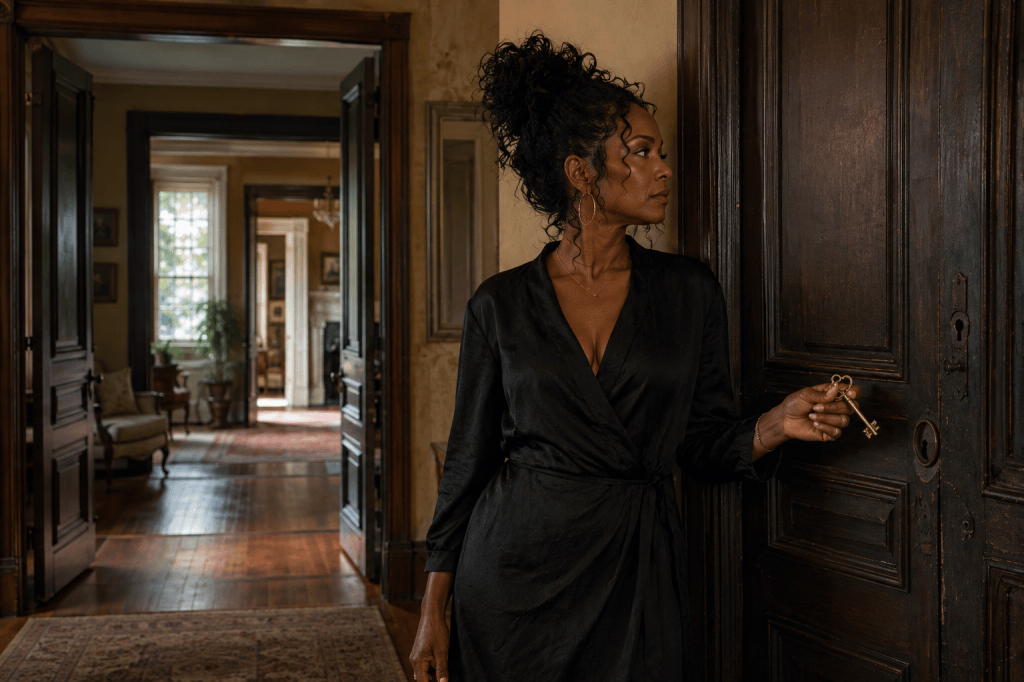
Marriage did not automatically come with a master key.
You can sleep beside someone every night. They can know what you take in your coffee. They can know how you look naked. They can know what annoys you, what makes you laugh, what you order at restaurants and which side of the bed you prefer.
They can know you intimately.
And they still may not know all of you.
Mine didn’t.
I Don’t Believe Vulnerability Is Strength
People love saying that.
“Vulnerability is strength.”
I don’t believe that.
Vulnerability can require courage. That I believe.
But vulnerability itself means making yourself vulnerable.
You are exposing something that another person can potentially hurt.
If I tell you exactly where the softest parts of me are, I have given you information.
You can protect those places.
Or you can improve your fucking aim.
I understand that vulnerability can create intimacy. I understand the argument. If nobody gets access to those parts of you, nobody can meet you there either.
I’m not confused about the transaction.
I question the price.
No one has ever been better at protecting me than me.
That is not something I learned from a self-help book. Life taught me that.
So when someone tells me that I need to become more vulnerable so that I can experience deeper connection, part of me inevitably asks:
Why would I give another human being the power to harm me in exchange for the possibility that they won’t?
I haven’t found a satisfactory answer.
There Is a Cost
This would be a much cleaner story if I told you my defenses made me invincible.
They didn’t.
There is a cost.
I have difficulty connecting deeply with people.
I am lonely.
And I don’t mean the temporary loneliness of spending Saturday night by yourself and wishing someone were sitting beside you.
I’ve been lonely for so long that I don’t know what not being lonely feels like.
That’s different.
Loneliness is familiar territory.
Maybe there is a kind of connection available to people who are willing to surrender more of themselves than I am.
Maybe there are rooms in relationships I have never entered because admission requires a level of vulnerability I am unwilling to provide.
I can acknowledge that.
It still doesn’t make me want to hand over the key.
That’s the uncomfortable part.
I understand what my survival skills cost me.
I am simply not convinced the alternative would have been cheaper.
The Door Isn’t Accidentally Locked
I don’t know whether I will ever become completely vulnerable with another person.
I’m almost fifty.
People talk about vulnerability like a muscle. Maybe they’re right. If so, mine hasn’t gotten much exercise.
Could I strengthen it?
Probably.
Do I have enough time left in this realm to become a fundamentally different kind of person?
Maybe.
Do I care enough to try?
I honestly don’t know.
And I’m not going to manufacture a beautiful answer because essays are supposed to end with growth.
Maybe someday someone will know all of me.
Maybe nobody ever will.
I know there are limitations to the way I move through the world. I know there are things my defenses keep out that might have been beautiful.
But I also know what those defenses kept alive.
Me.
I became very good at giving people enough of myself to have a relationship with me without necessarily giving them enough to reach every part of me.
That is not always a strength.
It is not always a weakness either.
It is something I learned to do.
And after all these years, I still know one thing with absolute certainty:
No one has ever been better at protecting me than me.
The door isn’t accidentally locked.
I locked it.
And I still have the key.



Leave a comment