When My Stepfather Died, I Felt Relief. My Brother Felt Grief.
People love telling estranged adult children that they’ll regret cutting off their parents when those parents die.
“You’ll miss them one day.”
“You only have one mother.”
“Life is short. You should forgive.”
Apparently, death is supposed to erase everything that happened before it. The moment somebody takes their last breath, we’re expected to forget the years of misery they inflicted on everyone unfortunate enough to share a roof with them.
Well, I have a story about that.
When my stepfather died, I wasn’t sad.
I was relieved.
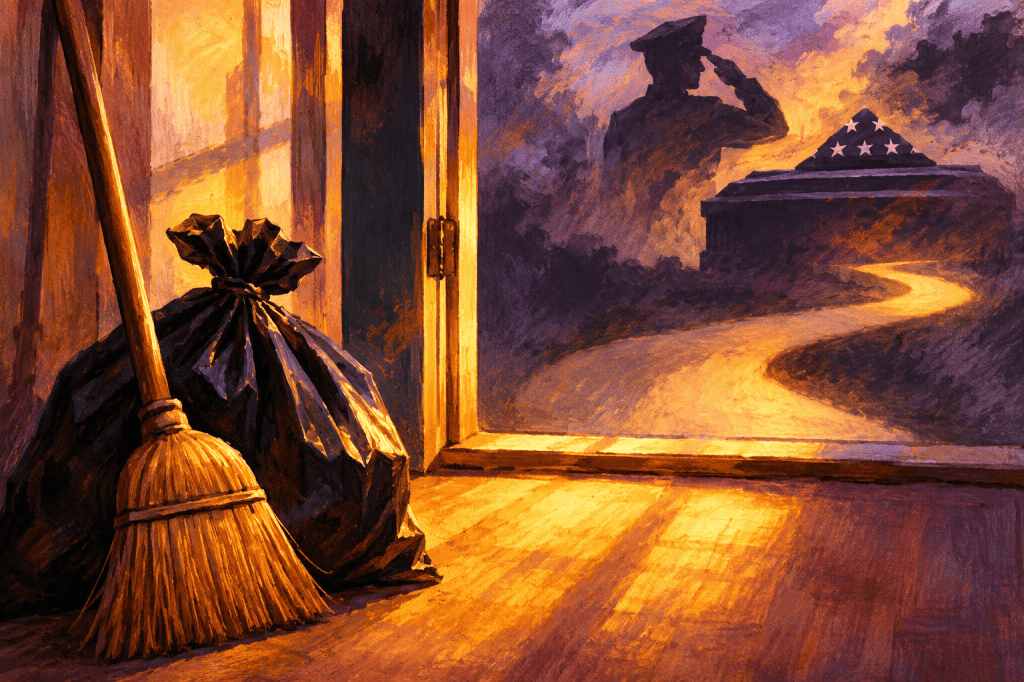
And I mean relieved in the way you feel when you’ve finished cleaning your house, thrown out all the garbage, opened the windows, and admired how much better everything looks.
The world felt a little cleaner.
I know that’s not what people are supposed to say about the dead.
But here we are.
My Mother’s Green Card and Half the Rent
My stepfather was my mother’s second husband, although I prefer his other title: Her Green Card and Half the Rent.
That was essentially his job description in our household.
My mother obtained her American immigration status through her marriage to him. He also contributed toward the rent, which apparently made him worth keeping around despite the considerable disadvantages of his personality.
And by disadvantages, I mean violence, alcoholism, intimidation, and a remarkable talent for making everyone around him miserable.
My stepfather wasn’t a man who enjoyed an occasional drink after work.
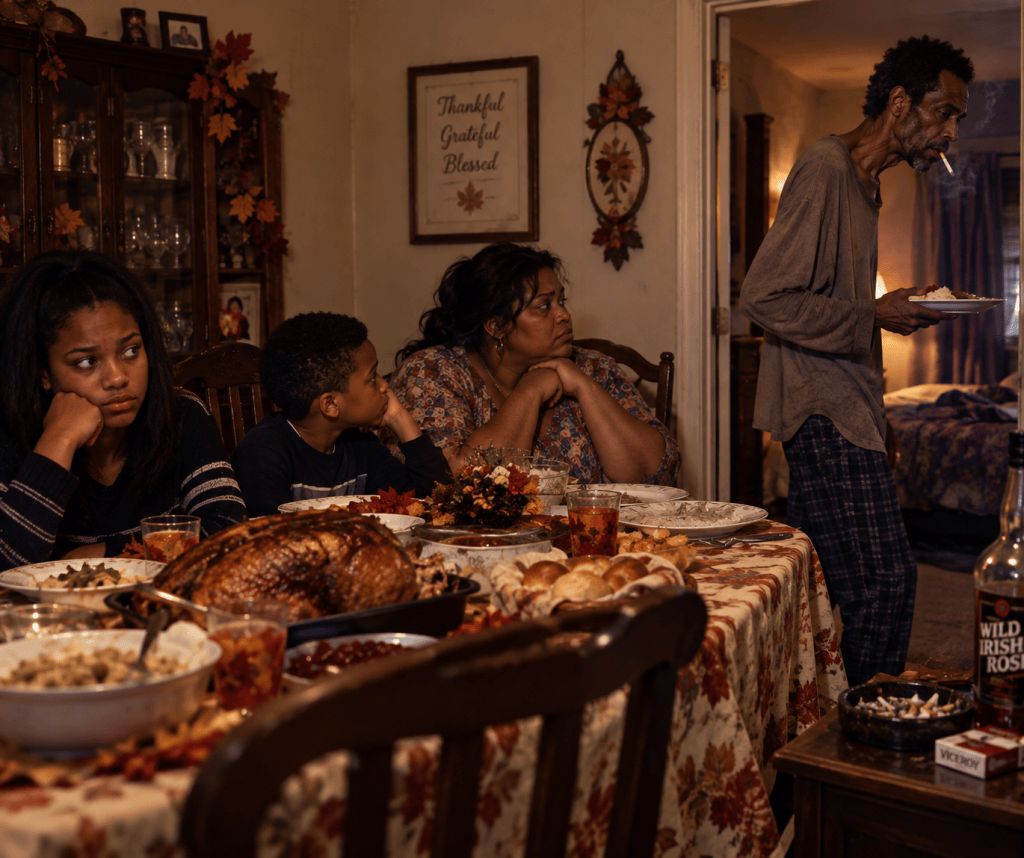
He was the kind of man who could start his morning with cheap vodka or Wild Irish Rose before breakfast had even crossed his mind.
He drank throughout the day.
Some people need coffee to get themselves going in the morning. My stepfather apparently preferred to marinate his internal organs.
And when he wasn’t drinking, he was often making someone else’s life unpleasant.
My mother was one of his targets. So were her children.
I remember the violence. I remember the shouting, the threats, the unpredictability. I remember what it felt like to live in a household where another person’s mood determined whether the day would be tolerable or terrifying.
We were children. We didn’t choose this man.
My mother did.
And here’s the part that still astonishes me.
The highest monthly rent I remember my mother paying during those years was approximately eight hundred dollars.
My stepfather’s contribution was about four hundred.
Four. Hundred. Dollars.
Granted, that was a more substantial amount of money back then. I’m not pretending otherwise.
But consider what came with it.
For approximately four hundred dollars a month, we got an alcoholic man who terrorized the household.
My mother endured violence. Her children endured violence. The entire household operated around the moods of a man who couldn’t seem to make it through breakfast without alcohol.
And for what?
Half the rent?
My mother was a woman who liked to present herself as sophisticated, ambitious, and professionally accomplished. She wore her high heels and pantyhose to work. She cared about appearances and status.
Yet somehow, this was the arrangement she maintained for years.
I understand that abusive relationships can be complicated. Financial dependence, immigration status, fear, and limited options can make leaving extraordinarily difficult.
But there’s another truth that deserves just as much attention.
When a parent remains in a violent household, the children don’t get to opt out of the consequences.
Whatever my mother believed she was gaining from that marriage, my brother and I were paying for it too.
And unlike her, we hadn’t agreed to the arrangement.
He Had a History
According to stories my mother told me, my stepfather had been involved with other women before her.
One was an older woman who had children of her own. She reportedly ended the relationship because of his violence.
Another woman, whom my stepfather apparently enjoyed describing as prettier than my mother, also reportedly left him because of his violent behavior.
So the pattern didn’t begin with our household.
I don’t know precisely when my mother learned the details of those relationships. I only know what she eventually told me.
What I do know is that my stepfather brought his violence into our home, and it became part of our childhood.
My mother wasn’t the only person who suffered in that marriage.
That’s the distinction I wish more people understood.
My mother obtained her green card through my stepfather.
I didn’t.
I eventually obtained my own green card through my first husband, long after I’d left that household.
So when people talk about the sacrifices immigrant parents make to establish themselves in America, I have a question.
What about the sacrifices their children are forced to make?
Because I certainly sacrificed plenty for my mother’s immigration story.
And I didn’t even get a green card out of the arrangement.
The Phone Call
Years later, my mother and stepfather were estranged.
They were still legally married, but they had been living separately for years.
By then, I was no longer speaking to my mother. I was, however, still in contact with my younger brother.
One day, he called me.
“You’re not going to believe this.”
“What?”
“My stepfather died.”
“Wow. What killed him?”
“What do you think?”
That was essentially the conversation.
There wasn’t much mystery surrounding the likely culprit.
My stepfather had reportedly developed cirrhosis or another serious alcohol-related health condition. Given how heavily he drank throughout his life, an alcohol-related death was hardly an unimaginable outcome.
I never obtained his medical records, so I can’t tell you his precise cause of death.
But nobody in the family seemed particularly surprised that his drinking had caught up with him.
What was surprising was his age.
He was only in his fifties.
That’s relatively young to die, even for someone who had spent decades treating his body like a liquor cabinet.
But what surprised me even more was my brother’s reaction.
He was sad.
Genuinely sad.
He experienced my stepfather’s death as a loss.
And I remember thinking how extraordinary that was, considering the childhood we’d endured with this man.
We had lived in the same household. Witnessed the same dysfunction. Experienced the same atmosphere of fear and instability.
Yet when my stepfather died, my brother grieved.
I felt relief.
I didn’t tell my brother that during our initial conversation.
He was grieving, and I saw no reason to interfere with that.
Months later, I told him how I actually felt.
I wasn’t sad.
Not even a little.
In fact, the feeling was almost as pleasant as lying on a beach somewhere, enjoying the sunshine without a care in the world.
And no, I’m not exaggerating for literary effect.
That’s genuinely how I remember feeling.
Back Where He Started
There’s another detail about my stepfather’s death that I find almost poetic.
When my mother first met him, he was living at his aunt’s house, sleeping on her couch.
Years later, after the marriage had deteriorated and they were living separately, he ended up back at that same aunt’s house.
Sleeping on her couch again.
Think about that.
In between those two periods on the couch, he had married my mother, helped her obtain immigration status, contributed toward the rent, and inflicted years of misery on the household.
And when it was all over, he was right back where he’d started.
My mother’s green card had been secured.
The marriage had fallen apart.
And Half the Rent had returned to his aunt’s couch.
Life has a peculiar sense of humor.
The Flag and the Funeral
According to what I was told, my stepfather had been dead for approximately a week before my mother learned about it.
His aunt had apparently been trying to contact her.
Because despite their years of separation, my mother was still legally his wife.
And somebody had to deal with the funeral arrangements.
My stepfather had served in the United States military for a relatively short period earlier in his life, which meant military funeral honors were part of his burial.
Eventually, his aunt reached my mother, and my mother helped arrange the funeral.
My younger brother attended with his then-girlfriend.
I didn’t go.
I don’t even know where my stepfather is buried.
And that’s probably for the best, because I can’t promise I would have behaved respectfully at his graveside.
From what I heard, he received a proper funeral.
There was an American flag on his coffin.
There was a ceremony.
The flag was folded into that familiar triangle and presented to my mother, the wife from whom he’d been estranged for years.
And I couldn’t help thinking about the absurdity of it all.
Here was a man who had made life miserable for the people closest to him, receiving a dignified farewell.
But funerals have a funny way of turning people’s lives into Instagram reels.
You know what I mean.
They select the flattering moments.
The accomplishments.
The respectable titles.
The military service.
The carefully chosen photographs.
Nobody necessarily stands up and says, “Well, he was a violent alcoholic who terrorized his wife and stepchildren, but at least he served his country.”
No.
We focus on the highlights.
And I understand why.
Funerals are largely for the living. People gather to mourn, remember, and find comfort.
My brother was entitled to his grief. Anyone who loved my stepfather was entitled to mourn him.
But I was equally entitled to remember the man I actually knew.
The man who drank before breakfast.
The man who made our home frightening.
The man whose presence could change the atmosphere of an entire household.
A folded American flag didn’t erase those memories.
Neither did a coffin.
And neither did death.
Not Every Death Is a Loss
There’s a peculiar expectation that people should grieve when someone dies, regardless of how that person treated them.
Especially when the deceased was a parent or stepparent.
People assume that estranged children secretly long for reconciliation.
That underneath the anger, there’s a wounded little child waiting for an apology.
That when the parent finally dies, regret will come flooding in.
Sometimes that happens.
But not always.
Sometimes the relationship ended emotionally long before the person died.
Sometimes you’ve already mourned the childhood you didn’t have, the protection you never received, and the family you wished existed.
Sometimes you’ve spent years building a life in which that person no longer has any meaningful place.
And when they die, there’s simply nothing left to grieve.
I hadn’t feared my stepfather physically since leaving home.
His death didn’t free me from some immediate threat. I’d already established my independence.
What it did was close a chapter.
Permanently.
I didn’t have to wonder whether I’d ever encounter him again. I didn’t have to consider what I might say if I did.
He was gone.
And I was perfectly comfortable with that.
My brother felt differently.
That’s his experience, and I respect it.
But his sadness didn’t create sadness in me.
We were two people who survived the same household and walked away with different emotional relationships to the man who had dominated it.
There’s no rule that says survivors must feel the same way.
A Little Cleaner
I sometimes think about the difference between how society remembers people and how the people closest to them remember them.
A person can be a veteran, a husband, a neighbor, or someone’s beloved relative.
And that same person can be a source of terror inside their own home.
Those identities aren’t mutually exclusive.
But the respectable ones shouldn’t automatically cancel out the ugly ones.
My stepfather was my mother’s second husband.
Her Green Card and Half the Rent.
He was also the man whose violence helped define some of the worst years of my childhood.
When he died, I didn’t feel compelled to forgive him.
I didn’t feel guilty for staying away from his funeral.
I didn’t suddenly discover some hidden reservoir of affection.
I simply felt that the world had become a slightly better place.
Like finishing a long-overdue housecleaning.
You gather up what no longer belongs, carry it outside, and close the door.
Then you look around.
The air feels lighter.
The room feels better.
And you don’t spend the afternoon mourning the garbage.
Some people leave behind an emptiness when they die.
Others leave behind a world that feels a little cleaner.
For me, my stepfather belonged to the second category.
And I make no apologies for that.




Leave a Reply