
The Clean Sweep: Why Cutting Off Your Parents Isn’t Enough
I used to believe that once I stopped speaking to my mother, I would finally be free of the dysfunction I had spent my childhood trying to escape.
I was wrong.
What nobody told me was that cutting off an abusive parent doesn’t necessarily mean you’ve escaped the family system that enabled them. Sometimes, the very people you believe are safe to keep in your life become the connections that prevent you from moving forward.
And sometimes those people are your own siblings.
I wish someone had explained this to me decades ago. It would have saved me years of disappointment, frustration, and unnecessary emotional labor.
But when I was a young woman trying to make sense of my childhood, we didn’t have the abundance of podcasts, online communities, and conversations about family estrangement that exist today. There wasn’t a readily available roadmap explaining what happens after you walk away.
I had to learn through experience.
And because I learned the hard way, I’m going to say something that may make some people uncomfortable.
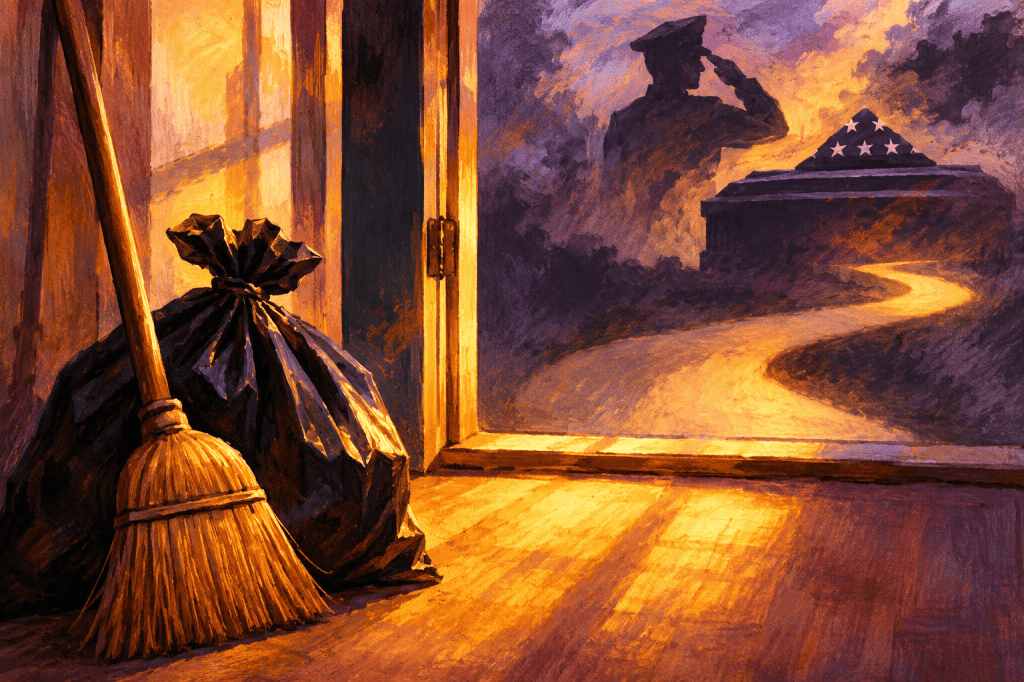
If you genuinely want to separate yourself from a dysfunctional family, I believe you need to make a clean sweep.
Not just the abusive parent. The entire branch of the family tree that keeps you connected to the dysfunction.
The Sibling You Thought Would Understand
I have a younger brother. He was born in 1983, six years after me.
When he arrived, I was still a little girl myself. Yet I became one of his caregivers.
I changed his nappies. I fed him bottles. I bathed him. I helped potty train him. I took him to school and taught him things that an adult should have been responsible for teaching him.
I remember being frightened of the safety pins we used to fasten cloth nappies in Jamaica. I was so afraid of sticking myself that I sometimes failed to protect his skin properly while fastening them.
Think about that.
I was a child trying to change another child’s diaper, afraid of hurting myself, while attempting to perform a task I was far too young to have been given.
Another memory has stayed with me for more than forty years.
My mother had gone out, possibly to the dressmaker, leaving me responsible for my baby brother. I was feeding him when he vomited, getting some of it in his hair.
I decided he needed cleaning.
So I took him into the backyard, where we had a cement laundry basin with running water, and washed the vomit out of his hair.
Some neighbors saw me and alerted my mother.
I remember being insulted.
As far as I was concerned, I had handled the situation perfectly well. The baby was safe, the vomit was gone, and I couldn’t understand why anybody was making a fuss.
Looking back, I understand what those neighbors probably saw.
A six-year-old girl caring for an infant without adult supervision.
My mother didn’t reprimand me. I suspect she understood that discouraging me from caring for my brother might mean having to assume more of those responsibilities herself.
My competence was convenient.
For years, my brother and I could joke about some of these childhood experiences. I thought there was an understanding between us. After all, I had sacrificed part of my childhood helping to raise him.
Surely that counted for something.
Apparently, not nearly as much as I believed.
As adults, I eventually came to understand that his loyalty remained with our mother.
The mother whose responsibilities I had helped carry.
The mother from whom I had spent years trying to escape.
I wasn’t asking my brother to repay me for changing his diapers. I wasn’t expecting a medal for taking him to school.
But I had believed that our history would translate into a certain degree of loyalty and understanding.
That assumption cost me.
One of the hardest lessons I’ve learned is that the people you sacrificed for are not necessarily the people who will stand beside you.
Sometimes they will stand beside the very person whose responsibilities you were forced to assume.
And you have to decide what you’re going to do with that information.
The Favored Child May Not See What You See
Another mistake I made was assuming that because my siblings and I shared a mother, we would eventually arrive at similar conclusions about her.
But children raised in the same household do not necessarily experience the same parent.
One child may be criticized, dismissed, or treated primarily as a source of labor. Another may be favored, indulged, or placed on a pedestal.
And sometimes that favoritism exists because the parent sees more of themselves in one child than another.
I believe that was part of the dynamic in my family.
My mother never seemed particularly curious about me.
She had ideas about who I should become, what I should enjoy, and what kind of life I should pursue. But my actual personality rarely interested her.
If something appealed to me but didn’t appeal to her, it was often dismissed as fantasy or stupidity. Even something as ordinary as my food preferences could become an issue.
She appreciated what reflected her own values and interests. What differed from them received little consideration.
I eventually concluded that my mother liked me when I was useful to her.
But liking me as a person?
No. I cannot say that was my experience.
And here’s something I wish I had understood much earlier.
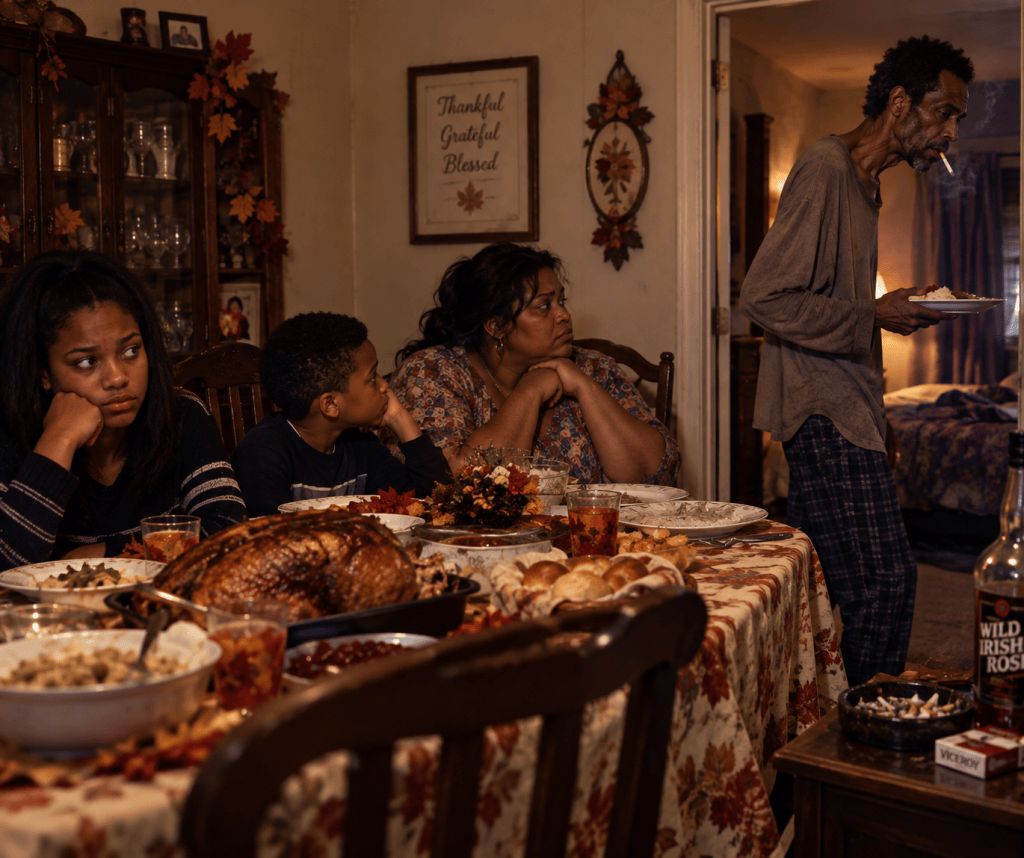
If your sibling enjoys a close, comfortable relationship with the parent who harmed you, you cannot automatically assume that sibling shares your understanding of the family.
They may see the parent differently. They may share the parent’s values. They may benefit from the relationship in ways you never did.
They may even regard your decision to leave as unnecessary or unreasonable.
You cannot build your peace around the expectation that one day they will see things your way.
I spent too many years believing that shared childhood experiences would produce shared loyalty.
They didn’t.
Why I Believe in a Complete Clean Sweep
Some people believe they can cut off an abusive parent while maintaining relationships with siblings and extended relatives who remain closely connected to that parent.
I understand why.
Nobody wants to lose an entire family.
We tell ourselves that we can maintain separate relationships. That our siblings will respect our boundaries. That we can keep the people we love without reopening the door to the people who hurt us.
But I no longer believe that is a sound strategy for someone seeking complete separation from a dysfunctional family system.
A sibling doesn’t have to be openly abusive to keep you connected to dysfunction.
Information can travel through family relationships. Personal developments can become family gossip. Boundaries can be questioned. Old narratives can be repeated. Your decision to remain estranged can become something other relatives believe they have the authority to debate.
And sometimes the emotional damage is simpler than that.
Sometimes maintaining the relationship means repeatedly confronting the reality that someone you loved and protected has chosen an allegiance you cannot reconcile with your own experiences.
I don’t want to spend the rest of my life negotiating those relationships.
I don’t want to explain my childhood to people who were there.
I don’t want to keep defending decisions I made to protect myself.
And I certainly don’t want my peace dependent on whether someone else can keep their relationship with my abuser separate from their relationship with me.
That’s why I advocate a clean sweep.
If the branch is keeping you attached to the dysfunction, sever the branch.
People are free to disagree with that advice. They can decide what resonates with their circumstances.
But I am not going to pretend that maintaining those family connections worked for me when it didn’t.
I wish I had made the separation much earlier.
The Mistake I Made With My Own Children
There is another part of estrangement that I believe deserves far more attention.
Your children.
When I became a mother, I wanted my children to have a different childhood from mine.
I didn’t want to burden them with the details of what I had endured. I didn’t want them carrying my memories, my anger, or my disappointments.
I thought keeping those experiences to myself was an act of protection.
I now believe that was a mistake.
Children grow up.
They become curious about their ancestry, their grandparents, and the relatives they rarely or never see.
And when they don’t know why those relationships are absent, they may create their own explanations.
They may assume there was a misunderstanding.
They may believe their parent is holding an unnecessary grudge.
They may decide that because someone is their biological grandparent, that person deserves an opportunity to establish a relationship.
But blood relationships are not character references.
A person does not become emotionally safe simply because they share DNA with your child.
And an abusive parent does not necessarily become a safe grandparent simply because another generation has arrived.
I’ve heard accounts of estranged grandparents waiting until grandchildren reach adulthood before attempting to establish contact.
At eighteen, those grandchildren can make their own decisions about whom they associate with.
And if they know little about the family history, they may approach those relationships without understanding the reasons their parent established distance in the first place.
That possibility deserves serious consideration.
I am not suggesting that parents should unload every traumatic childhood memory onto young children.
There is a difference between educating a child and making that child responsible for your emotional pain.
But silence is not necessarily protection.
Children can be given age-appropriate information. As they mature, they can be told more.
They can learn that some relatives have behaved in harmful ways, that family relationships are not automatically safe, and that boundaries exist for reasons.
By adulthood, I believe they deserve enough truthful family history to make informed decisions.
I wish I had understood that distinction sooner.
You don’t have to make your children carry your trauma. But you shouldn’t leave them ignorant of the dangers you worked so hard to escape.
When I left home at eighteen, I thought freedom meant getting out of the house.
And in many ways, it did.
I had spent years preparing for that moment. I wanted to live somewhere I wasn’t afraid. Somewhere I could make decisions without someone else’s anger determining the consequences.
I wanted my life to belong to me.
But physical separation was only the beginning.
Over the following decades, I learned that leaving a dysfunctional family involves more than changing your address or refusing to answer the telephone.
You have to reconsider relationships you once believed were permanent.
You have to stop assuming that people will appreciate sacrifices they never asked you to make.
You have to recognize that someone can share your childhood without sharing your interpretation of it.
And if you become a parent yourself, you have to think about how the family history you escaped might eventually reach your children.
These are lessons I wish someone had explained to me when I was young.
Instead, I learned them gradually, sometimes painfully, and often long after I could have benefited from knowing them.
I’m almost fifty now.
I have spent enough of my life carrying responsibilities that belonged to other people. I have spent enough time trying to understand people who showed little interest in understanding me.
I no longer believe that preserving family relationships is inherently virtuous.
Sometimes preserving those relationships means preserving access to the very dysfunction you were trying to leave.
And sometimes the healthiest thing you can do for yourself is stop participating altogether.
Freedom Means Closing Every Door
I know some people will find my position extreme.
That’s fine.
I’m not writing this to win a popularity contest or to reassure people that every family relationship can be salvaged.
I’m writing it because somewhere there is an adult child who has finally stopped speaking to an abusive parent and believes the hardest part is over.
Maybe it is.
But maybe that person still has siblings who remain loyal to the parent. Maybe there are relatives passing information back and forth. Maybe there are children growing up without understanding why certain grandparents are absent.
Maybe the person who escaped is still trying to maintain a connection to the very family system that made escape necessary.
I want that person to consider something I wish I had considered decades ago.
You do not have to preserve a relationship simply because it existed before you had the power to choose it.
You do not have to remain available to people because you once cared for them.
And you do not have to leave doors open simply because the people standing behind them share your blood.
I spent my childhood learning how to escape.
I spent much of my adulthood learning that escape and freedom are not the same thing.
If I could go back and give my younger self one piece of advice, it would be this:
Don’t just leave the person who hurt you. Leave the family system that keeps bringing the hurt back into your life.
Make the clean sweep.
Tell your children the truth.
And give yourself permission to grow a life that no longer depends on the family tree you came from.



Leave a Reply